

Hi! 👋
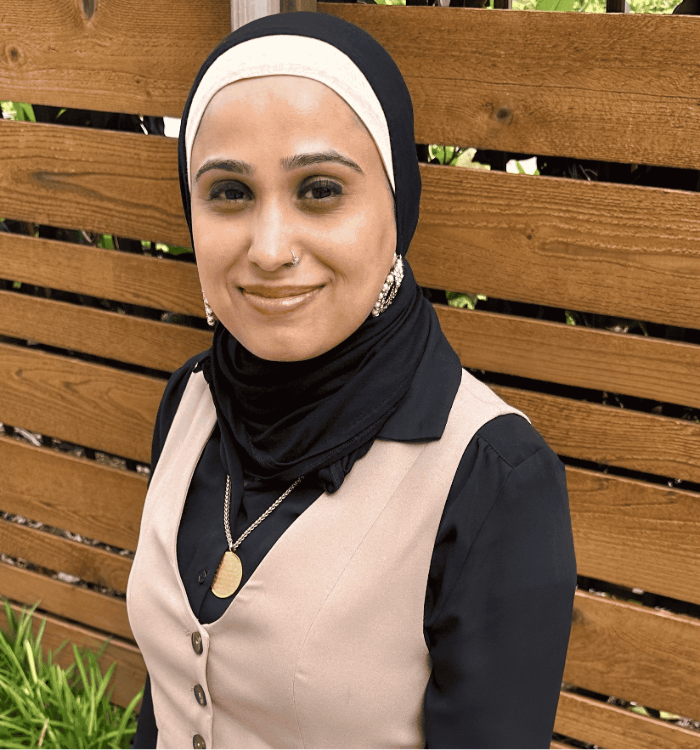
I am Hamida Khatri, a certified PMP® (Project Management Professional) currently pursuing my Doctor of Philosophy (PhD) in the Arts, Technology, and Emerging Communication (ATEC) program at the Harry W. Bass Jr. School of Arts, Humanities, and Technology, University of Texas at Dallas, while simultaneously working toward my licensure in Professional Counseling through the Master of Science in Clinical Mental Health Counseling program at the University of North Texas.
My research, Shadowed Realities, investigates how trauma can be embodied and transformed through Virtual Reality (VR) storytelling grounded in philosophy, psychology, and narrative design. By merging immersive technology with humanistic inquiry, my work aims to create culturally responsive frameworks for representing trauma and healing.
As a multipotentialite, I bring advanced expertise in Project Management, Research Development, Strategic Management, Design + Innovation, and Emerging Technologies. This multidimensional aptitude fuels my pursuit of diverse research interests.
Rooted in the emerging field of Computational Humanities, my work uses computational methods and immersive technologies to explore how human culture, emotion, and spirituality intersect with digital systems. I combine approaches from Trauma Studies and Psychology to investigate how the human experience of suffering and recovery can be expressed through virtual forms.
“To be a philosopher is not merely to have subtle thoughts, nor even to found a school…it is to solve some of the problems of life not only theoretically, but practically.”
— Thoreau


Academic Pursuits 👩🎓

My most read and bought publication…
Project Kali®: Celebration of Womanhood 📒
Project Kali®: Celebration of Womanhood seeks to illuminate the empowering nature of art and its creative applications has for better mental health for women.
An ongoing pursuit to understanding trauma…

Teardrop®: Trauma Storytelling ✏️
Teardrop® is a multimedia storytelling initiative that harnesses the power of personal narratives to address experiences of trauma and recovery. Through visual art, oral history, digital media, and immersive technologies like virtual reality, Teardrop® creates spaces for individuals to express, process, and transform their lived experiences.
By combining creative expression with community engagement, Teardrop® fosters empathy, promotes healing, and supports education and advocacy efforts. The project has been featured in exhibitions, workshops, and public programs as a compelling model for socially engaged storytelling.